
What 'continental' actually means for your servicing
In Singapore, continental is the catch-all owners use for European makes: BMW, Mercedes-Benz, Audi, Volkswagen, Volvo, Mini, and the rest. It is a useful label at the coffee shop, but it hides a lot. A Volkswagen Golf and a Mercedes S-Class are both continental, yet they ask for very different things at service time. So the first honest point is that continental is not one category of car, it is a rough family with shared habits.
What these makes tend to have in common is how they are engineered: tighter tolerances, more electronics that talk to each other, turbocharged and direct-injection engines, and manufacturer-specific fluids. None of that makes them fragile. It makes them particular. A continental car serviced to its own specification runs beautifully for years. The same car serviced like a generic runabout is where the horror stories start, and that gap is what this guide is really about.
Why continental servicing costs more, and where the fear is oversold
There is a real reason continental servicing sits above a mass-market Japanese car, and it is not a workshop markup for the badge. The oils are specific and more expensive, the parts often cost more, diagnostics take longer and need brand-capable tools, and some jobs need coding that a generic bay cannot do. Add it up and an honest continental service lands higher than a basic Japanese oil change. That part is fair.
What is oversold is the idea that continental automatically means painful bills forever. Some of that fear is manufactured by the two extremes you see online: dealer quotes that assume every part is genuine and every hour is dealer-rate, and cut-price packages advertised from a hundred dollars that quietly exclude the continental-specific oil and the checks that matter. The truth sits in the middle. A capable independent servicing your out-of-warranty European car to the correct spec usually costs meaningfully less than the dealer, without the corners that make cheap servicing expensive later.
The specifics that actually matter: oil, diagnostics, coding
Three things separate a workshop that can genuinely service a continental car from one that simply accepts it. The first is oil. European makes publish their own approvals, not just a viscosity: BMW Longlife LL-01 or LL-04, Mercedes-Benz 229.5 or 229.52, Volkswagen and Audi 504 00 and 507 00. These are not marketing codes. Fitting a generic 5W-30 that does not carry the right approval can affect the particulate filter, the emissions parts, and long-term engine protection. We match the oil to the exact engine, every time.
The second is diagnostics. A continental car expects to be read with tools that speak its language, watching live data and brand-specific fault codes, not just a generic OBD reader that pulls a code and clears it. The third is coding. Replace a battery on a modern BMW or Mercedes and it often needs registering so the charging system adapts. Fit certain modules, injectors, or electronic parts and they may need programming before they behave. A workshop that cannot code can still fit the part, but it can leave a fault light or a flat-feeling car behind. If your car is a BMW specifically, our BMW workshop guide goes deeper on exactly these points.
Where European cars tend to bite in Singapore's heat
Our climate is hard on the systems continental cars lean on. Oil leaks are the classic: valve cover gaskets and oil filter housing gaskets harden and weep as the rubber ages in constant heat, and a small seep left alone becomes a burning smell and a bigger job. Cooling parts are the other big one. Electric water pumps and plastic thermostat housings have a service life and tend to fail with little warning, which is why we would rather check them proactively than meet them after an overheating event.
Direct-injection engines, common across BMW, Mercedes, Audi and Volkswagen, also build carbon on the intake valves over the years, showing up as rough idle, hesitation, or a flat pull. We clean that with walnut blasting rather than guesswork. Aircon is worth its own mention in Singapore: on continental cars the evaporator often sits deep behind the dashboard, so a leak there is a careful half-interior teardown, not a quick regas. We have documented that exact job on a continental car in our portfolio, because owners deserve to see what the labour actually involves before they are quoted for it.
Brand by brand: BMW, Mercedes, Audi and VW
The shared habits still split by badge, and knowing your make helps you ask better questions. BMW leans on Longlife oils, live-data diagnostics, and part registration, and has known patterns around cooling and oil leaks that a BMW-familiar workshop plans for. Mercedes-Benz has its own oil approvals and a lot of electronics, and the older the model the more its comfort systems become part of the servicing conversation. We are building out dedicated brand guides for these, with a Mercedes workshop guide next in the series.
Audi and Volkswagen share much of their engineering, including the 504 00 and 507 00 oil family and the DSG twin-clutch gearbox, which needs its own scheduled fluid and filter service that owners are often never told about. Volvo, Mini, and the rest each have their quirks too. The point is not to memorise all of it. It is to use a workshop that already knows your make's habits, so it can quote calmly and skip the parts you do not actually need.
How we service continental cars at JW Motoring
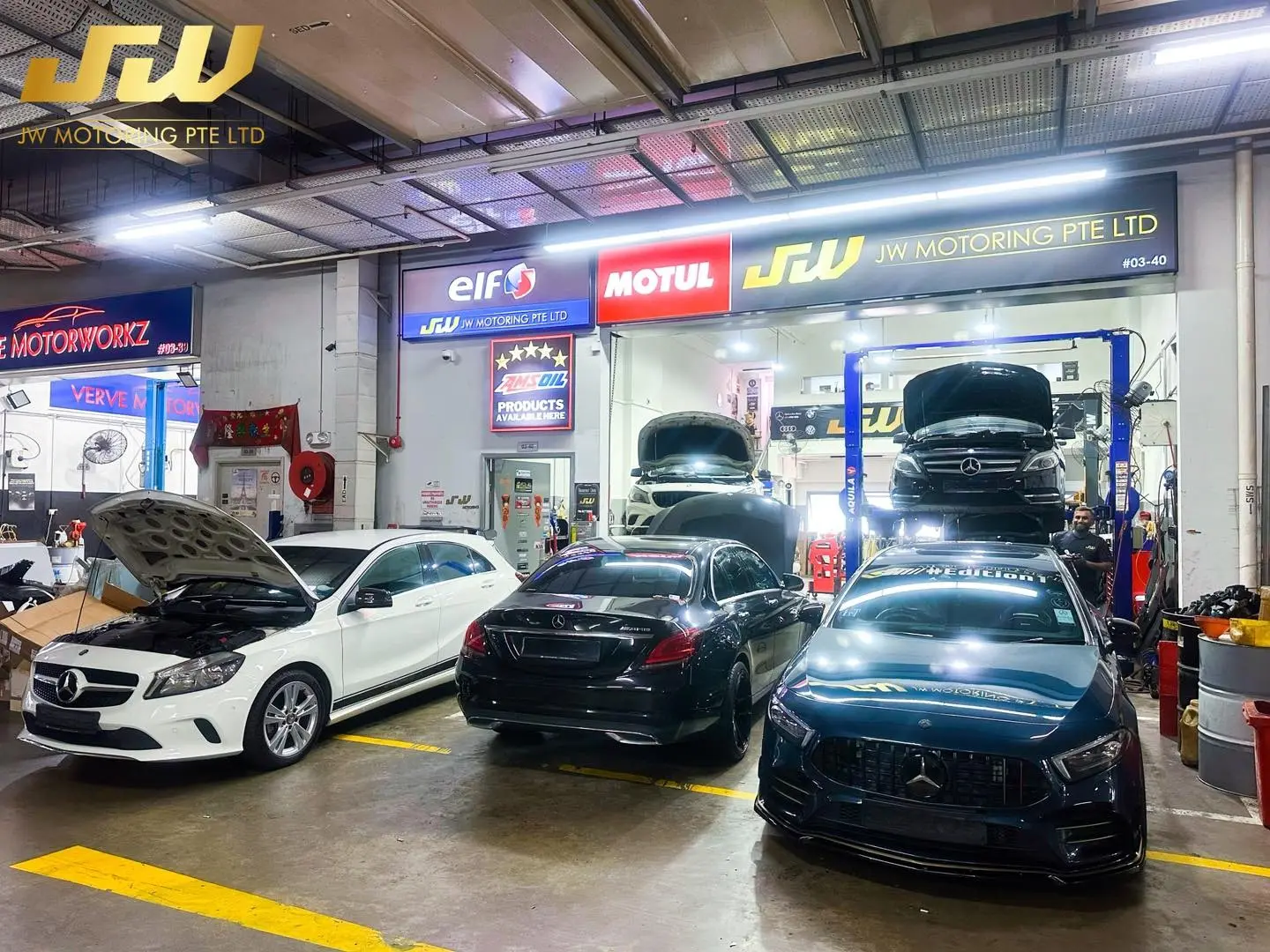
At our Kaki Bukit workshop we look after continental owners the same way we treat every car: diagnose first, explain the job, then quote before any spanner turns. In practice that means servicing to the correct manufacturer oil approval, reading the car with capable diagnostics, coding or registering parts when the job needs it, and handling the cooling, oil-leak, carbon, and aircon work that European cars ask for as they age. You get a plain summary of what is healthy, what we are watching, and what genuinely needs doing now.
We are also straight about scope. If your car needs factory-level programming we do not have, or a dedicated specialist for a particular job, we will say so rather than take the work and hope. For most out-of-warranty continental servicing and repair, though, we can do it properly and explain it in plain language. If you are weighing a big quote from elsewhere, send us your car's make, model, and the symptom, and we will tell you honestly what we would check first.


