Why small brake and suspension issues get expensive fast
Brakes and suspension rarely fail all at once. They give you warnings first, and the cost of the repair usually depends on how long those warnings are ignored. A worn pad caught early is a simple pad change; left until it grinds, it becomes pads and discs. A tired shock left alone chews through a set of tyres before it is replaced.
That is the pattern with almost every sign below: cheap to fix now, expensive to fix later. None of them mean you need to panic, but all of them are worth acting on rather than adapting to. The car gets a little less safe with each one you learn to live with.
Brake warning signs you should not ignore
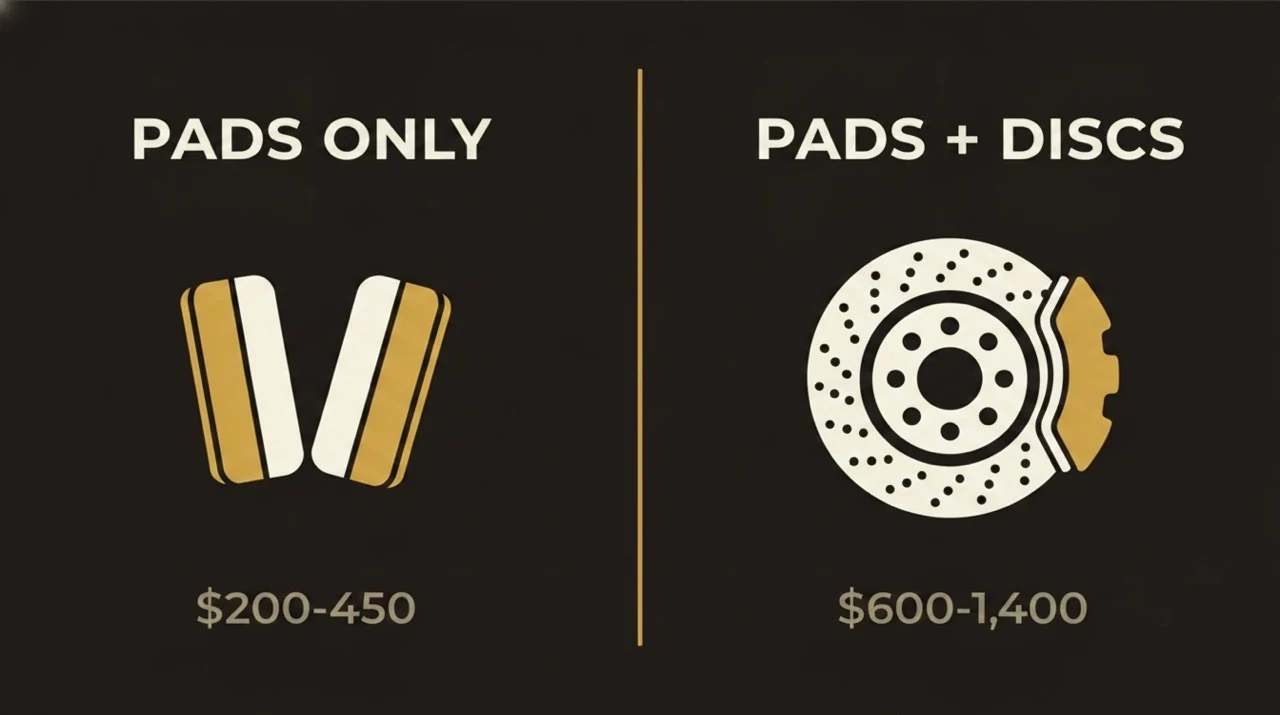
The clearest brake signs are noise and feel. Squealing often means the pads are getting low, a warning rather than an emergency. Grinding is more serious: it usually means the pad material is gone and metal is contacting the disc, which is unsafe and turns a pad job into a pad-and-disc job. A vibrating or pulsing brake pedal typically points to warped or unevenly worn discs.
Feel matters too. Longer stopping distances, a pedal that sinks or feels soft, or the car pulling to one side under braking all suggest something is wrong, from worn friction material to a fluid or caliper issue. Prompt inspection is far cheaper than replacing multiple components after metal-on-metal wear starts.
Suspension warning signs that affect safety and tyre life
Suspension problems usually show up over bumps and in corners. If the car bounces or floats after a hump, clunks over uneven road, dives more than it used to under braking, or leans hard in bends, the shocks, springs, or bushings may be past their best. A steering wheel that no longer self-centres or a car that wanders on the expressway are related clues.
Tyres often tell the story first. Cupped or uneven tyre wear that no rotation fixes points to worn suspension or alignment that has drifted. Worn suspension also makes braking less predictable, especially on wet Singapore roads, because the tyre cannot keep firm contact with the surface.
Why waiting multiplies the cost
The reason we push for early checks is not to sell more work, it is that these systems damage each other when neglected. Worn pads ruin discs. Bad shocks scrub tyres and stress other suspension parts. Dragging or seized brakes generate heat that cooks pads and rotors faster. One deferred fix quietly becomes three.
There is also a safety cost that does not show on an invoice: stopping distance and grip. In stop-start traffic and sudden downpours, that margin is exactly when you need brakes and suspension working properly. Catching wear early keeps both your money and that margin intact.
What a proper brake and suspension check involves
A good inspection is more than a glance. We measure remaining pad thickness, check discs for scoring, warping, and minimum thickness, inspect brake fluid and hoses, and look at calipers and slider pins for sticking. For suspension we check shocks for leaks, test bushings and ball joints for play, look at springs and mounts, and take a short road test when the symptom is something you feel rather than see.
The point is to confirm the actual cause before quoting, so you are not paying to replace parts that were never the problem. A workshop that quotes a big number before measuring anything is guessing.
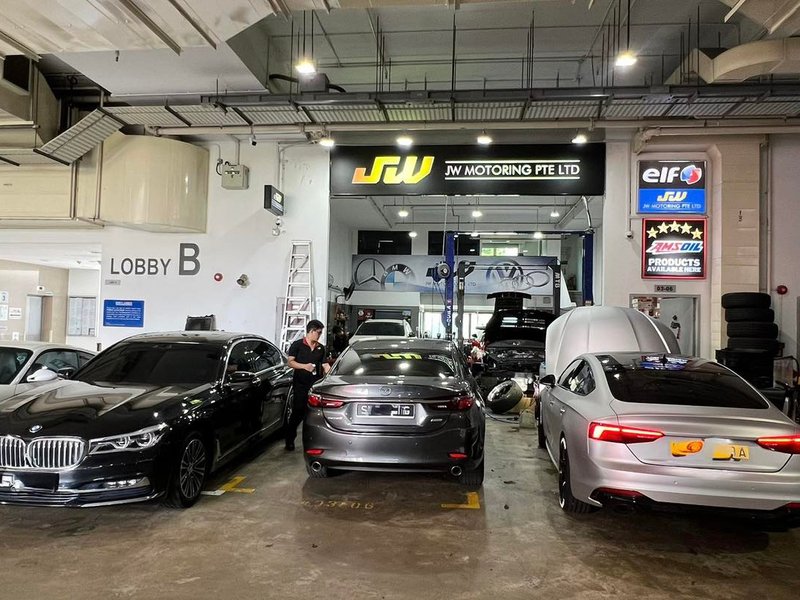
How we diagnose brake and suspension issues at JW Motoring
Our approach is to confirm the root cause first, then explain the repair options by urgency and cost, must-do now, monitor, or optional. That one step saves money and avoids the unnecessary replacements that make some workshops expensive. If a job can safely wait, we will tell you.
From there you get an itemised quote covering parts, labour, and any alignment needed after suspension work. If your complaint turns out to be a tyre or alignment issue rather than a worn part, we will say so. If you have a quote from elsewhere that feels high, send us the details for an honest second opinion.